




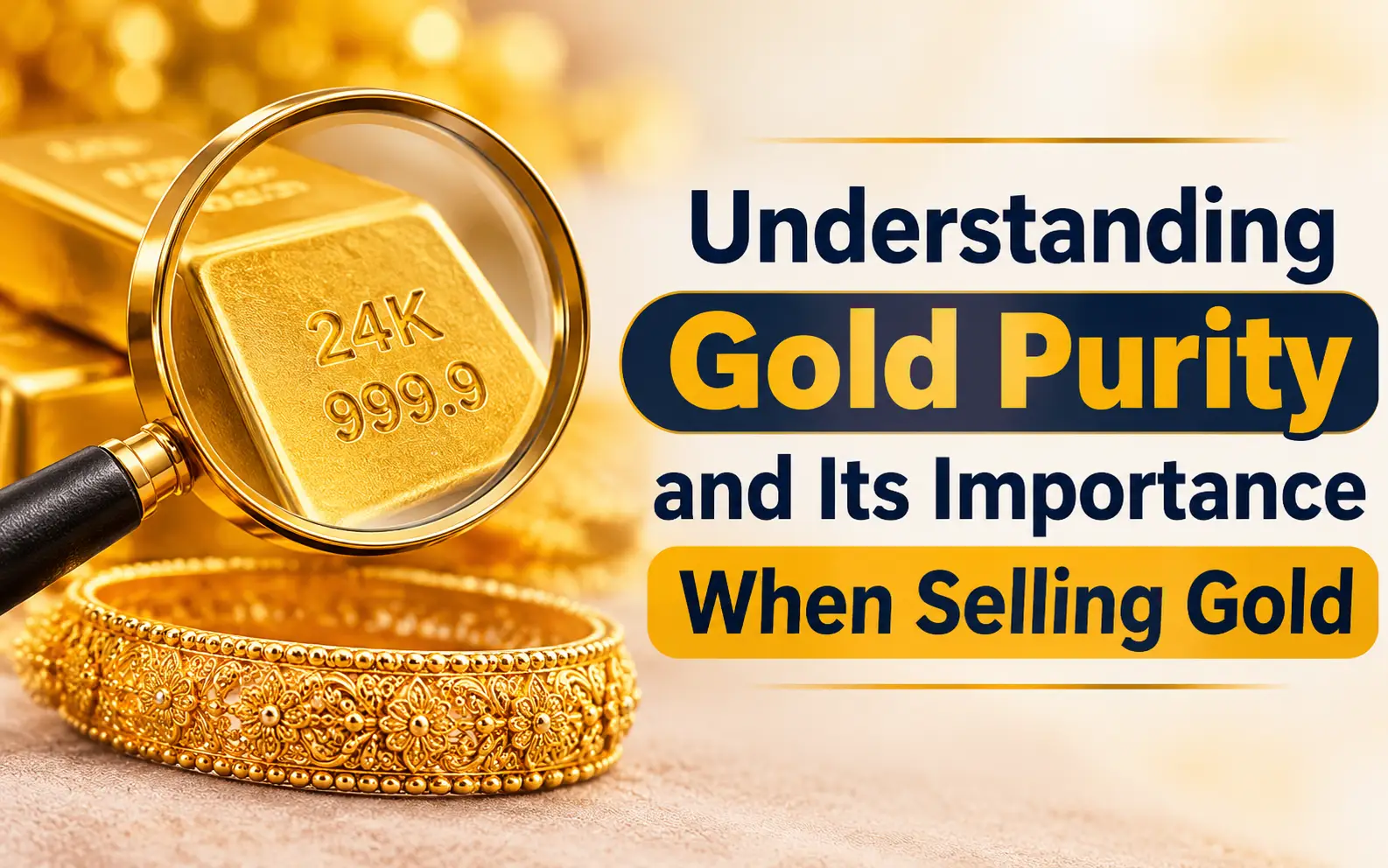
When selling jewellery, understanding gold purity and the best deal on gold selling in Bhubaneswar can help you make a more informed decision. Gold purity indicates how much actual gold an item contains, and it directly affects its estimated metal value.
A gold ornament may look similar to another piece but have a different karat rating. Knowing the difference between 24K, 22K, 18K and 14K gold helps you understand how purity testing works and why the final selling price can vary.
Knowing your gold's purity is the first step towards getting its true value. Make informed decisions, understand the karat, and sell your gold with confidence.
1. What Is Gold Purity?
Gold purity refers to the proportion of pure gold present in an item compared with other metals in the alloy. Pure gold is naturally soft, so jewellery is often made by mixing gold with metals such as copper, silver or zinc to improve its strength and durability.
Gold purity is commonly expressed in karats (K) or fineness.
- Karat: Indicates the proportion of gold out of 24 parts.
- Fineness: Shows the amount of pure gold in 1,000 parts of the material.
For example, 22K gold contains 22 parts gold out of 24 parts, while the remaining two parts consist of other metals.
Understanding this measurement is useful when selling old ornaments because the gold content is one of the main factors used to calculate their value.
2. Understanding Different Gold Karat Values
Gold jewellery comes in different purity levels. Each has its own gold content, appearance and typical use.
24K Gold
- 22K gold contains approximately 91.67% pure gold. It is widely used for traditional gold jewellery in India.
- The remaining metal content helps improve durability. Many traditional necklaces, bangles, chains and other ornaments are made using 22K gold.
22K Gold
- 22K gold contains approximately 91.67% pure gold. It is widely used for traditional gold jewellery in India.
- The remaining metal content helps improve durability. Many traditional necklaces, bangles, chains and other ornaments are made using 22K gold.
18K Gold
- 18K gold contains 75% pure gold, with the remaining 25% made up of other metals.
- It is commonly used in jewellery that includes gemstones or diamonds. The additional metals can improve strength and allow manufacturers to create different colours, including rose gold and white gold.
14K Gold
- 14K gold contains approximately 58.33% pure gold. It has a higher proportion of alloy metals than 18K or 22K gold.
- This composition can make it more durable for everyday jewellery. However, its gold content is lower, which affects its metal value when sold.
| Gold Type | Pure Gold Content | Common Fineness |
|---|---|---|
| 24K | 99.9% (Approximately) | 999 |
| 22K | 91.67% | 916 |
| 18K | 75% | 750 |
| 14K | 58.33% | 585 |
These figures describe the standard purity levels. Actual testing is necessary to establish the purity of a specific item.
3. How Gold Purity Affects Its Selling Value
Gold purity has a direct relationship with the amount of pure gold present in jewellery. For the same weight, higher-purity gold generally contains more actual gold than lower-karat jewellery.
Consider two ornaments that each weigh 10 grams:
- A 22K ornament contains approximately 9.17 grams of pure gold.
- An 18K ornament contains 7.5 grams of pure gold.
The difference in pure gold content helps explain why these two ornaments may receive different valuations even if their weights are identical.
Gold buyers generally consider the following information during valuation:
- Net gold weight: The weight of the gold after accounting for non-gold components.
- Purity: The proportion of actual gold in the item.
- Current gold rate: The applicable market rate for the relevant purity.
- Testing results: The purity assessment of the jewellery.
A simple way to understand the calculation is:
Estimated gold value = Net gold weight * Gold purity proportion * Applicable pure gold rate.
For example, if an ornament weighs 10 grams and has 22K purity, the estimated pure gold content is approximately 9.17 grams. The applicable market rate is then used to estimate its metal value.
The final offer may differ depending on the buyer's valuation method and any applicable deductions. Always ask for a clear explanation of the calculation.
4. How Is Gold Purity Tested?
Gold purity has a direct relationship with the amount of pure gold present in jewellery. For the same weight, higher-purity gold generally contains more actual gold than lower-karat jewellery.
Hallmark Verification
A hallmark is an official mark that indicates the purity of gold jewellery. In India, the Bureau of Indian Standards (BIS) operates the hallmarking system.
For applicable hallmarked jewellery, consumers can check the BIS hallmark details, including the purity grade and HUID number where relevant.
A hallmark is a useful starting point, but it does not remove the need to confirm the item's condition and weight during a selling transaction.
Electronic Gold Testing
Electronic testing equipment can help assess the gold content of an item by measuring its material properties.
The result depends on the instrument and testing method. Ask the buyer how the equipment works and whether the test is suitable for your particular ornament.
Touchstone and Acid Testing
Touchstone testing involves a small amount of metal against a testing stone and comparing the mark with known reference samples using testing solutions.
3. XRF Testing
X-ray fluorescence (XRF) testing is a non-destructive method that uses X-rays to identify the elements present in a material.
It can help the metal mix of jewellery without cutting or melting the item. However, the result may reflect the surface composition and may not always represent the entire piece, especially if it has plating or uneven composition.
A transparent buyer should explain the testing method and allow you to understand the valuation before accepting an offer.
5. Why Gold Purity Matters When Selling Old Jewellery
Old jewellery may have been purchased years ago, and you may not remember its exact purity. Some ornaments may also have worn or unclear markings.
Before selling, it is useful to understand that the original purchase price is not necessarily the basis of today's resale value.
A buyer generally considers the current gold rate, the item's net weight and its tested purity. Making charges, design costs and retail premiums paid at the time of purchase are generally not recovered as part of the gold's metal value.
For example, an old decorative necklace may have a higher original purchase price because of its craftsmanship. Its resale value as scrap gold may be calculated mainly from its recoverable gold content.
This is why understanding purity and asking for a proper valuation can help you avoid confusion during the selling process.
6. Factors Other Than Purity That Affect Gold Value
Purity is important, but it is not the only factor used to estimate the value of old jewellery.
Net Gold Weight
The total weight of an ornament may include stones, beads, enamel, threads and other non-gold materials. The buyer may calculate the gold value using the net gold weight rather than the complete item's weight.
Current Market Rate
Gold prices change with market conditions. The applicable rate on the day of the transaction can influence the offer.
Testing Results
If the tested purity differs from the hallmark or information provided by the seller, the buyer may use the verified result for valuation.
Stones and Other Components
Diamond and gemstone jewellery may require separate assessment. Do not assume that the weight of stones will be included in the gold weight calculation.
Buyer’s Valuation Policy
Different buyers may have different procedures, deductions and payment terms. Ask for a written or clearly explained breakdown before agreeing to sell.
7. How to Get a Fair Deal When Selling Gold
A little preparation can make the selling process easier and help you compare offers.
Follow these practical steps:
Check your jewellery: Look for hallmark details, purity marks and any available purchase documents.
Separate different items: Keep gold, silver, diamond and gemstone jewellery organised.
Ask about testing: Find out how the buyer will determine purity.
Confirm net weight: Ask how stones and non-gold components are handled.
Request a valuation breakdown: Understand the rate, weight, purity and deductions used.
Review the transaction: Make sure you understand and agree with the valuation before completing the sale.
Avoid accepting an offer simply because it sounds attractive. A clear explanation of the calculation is more useful than an unsupported promise of the highest price.
8. Selling Gold in Bhubaneswar: What Should You Check?
If you are looking for the best place to exchange gold for cash in Bhubaneswar, compare local buyers based on their testing process and valuation transparency.
Before choosing a gold buyer, ask:
- Is the gold tested in front of the customer?
- Is the testing method explained?
- Is the net gold weight shown clearly?
- Are stones and other non-gold materials excluded from the gold calculation?
- Is the applicable gold rate explained?
- Are deductions disclosed before the transaction?
- Are payment terms clear?
People looking for cash for old gold, silver and diamond in Bhubaneswar should also confirm whether the buyer evaluates each type of item separately
CashNGold is a gold dealer serving customers interested in selling precious metal jewellery. If you are considering selling old ornaments, review the available information on its website and ask about the valuation process before making a decision.
A fair transaction should leave you with a clear understanding of how your jewellery was assessed and how the final amount was calculated.
9. Frequently Asked Questions
1. What does 916 gold purity mean?
916 gold refers to 22K gold, which contains approximately 91.6% pure gold. The remaining portion consists of other metals added to improve strength and durability. This purity level is commonly used in Indian gold jewellery. If you are selling a 916-marked ornament, the buyer may still verify its purity and net weight before calculating its value.
2. Which gold purity is best for selling?
There is no single purity level that is best for every seller. Higher-purity gold contains more actual gold for the same weight, which generally results in a higher metal value at the same applicable rate. The final offer also depends on net weight, current market prices, testing results and the buyer's valuation terms.
3. Does gold hallmark affect the selling price?
A hallmark helps identify the declared purity of jewellery and can make verification easier. However, the selling price is generally based on the actual gold content, net weight and applicable market rate. Buyers may test hallmarked jewellery as part of their valuation process, especially if the markings are unclear or the item has undergone repairs.
4. How is gold purity checked before selling jewellery?
Gold purity can be assessed through methods such as hallmark verification, touchstone testing, electronic testing and XRF analysis. Each method has its own limitations. Ask the buyer which method will be used, whether the test is performed in your presence and how the result affects the final valuation.
5. Why is my old gold jewellery worth less than its original purchase price?
The original retail price may include making charges, design costs, taxes and other expenses that are not usually recovered when selling jewellery as gold. Resale valuation generally focuses on the item's net gold weight, tested purity and current gold rate. Stones and other non-gold components may also be excluded from the gold calculation.
6. How can I get a fair deal when selling gold in Bhubaneswar?
Compare buyers based on their testing methods, transparency and valuation calculations. Ask for the tested purity, net gold weight, applicable rate and any deductions before accepting an offer. Checking more than one buyer can help you understand the available options and make a better-informed decision.
6. Can I sell old gold, silver and diamond jewellery together?
You can ask a buyer whether they accept all three types of jewellery, but each material needs a suitable assessment. Gold and silver are valued according to their respective metal content and applicable rates, while diamond jewellery may require a separate assessment of the stones and setting. Confirm the buying terms before proceeding.
Contact Cashngold
Contact CashNGold for Gold Valuation Information
If you are planning to sell old gold jewellery and want to understand how its purity affects the value, speak with CashNGold. Ask about the available testing process, net weight calculation and valuation terms before deciding to sell.
Our other Branche's
Contact CashnGold
Gold purity is one of the main factors that determines the metal value of jewellery. Knowing the difference between 24K, 22K, 18K and 14K gold helps you understand why two ornaments with the same weight may receive different offers.
Before selling, check the hallmark, understand the testing method, confirm the net gold weight and ask for a clear valuation breakdown. If you are comparing options for selling old jewellery in Bhubaneswar, take time to review the buyer's process and payment terms before accepting an offer.
Book a Consultation